
GPR surveys in London
London is one of our most regular destinations. We travel up from our Southampton office for GPR, concrete scanning and utility surveys on construction sites, streets and occupied buildings across the capital.
What the survey finds
Working in London from Southampton
Our office is in West End, Southampton, and London is a regular trip up the M3, typically around two hours by road. We plan London work around full days on site, one site per day. For clients with several sites, we can book consecutive days.
We work across inner and outer London, from the City and Westminster to the outer boroughs, and on sites just outside the M25. Our route up the M3 also takes in north Surrey, Staines and the Heathrow area, where we work regularly for contractors.
What London surveys usually involve
London sites have been built over many times. Below a typical plot there may be old basements, cellars, foundations and backfilled excavations, as well as a dense web of live and abandoned services. Utility records are often incomplete or out of date.
The jobs we are asked to do include:
- utility surveys before excavation in streets, yards and development plots
- locating obstructions before piling or basement work
- scanning slabs for rebar and post-tension cables before coring, cutting or fixing in offices and car parks
- tracing chimney flues and checking walls in older buildings before refurbishment
- checking for voids under pavements and yards
Ground and site conditions
Much of London sits on London Clay, which absorbs radar energy and limits how deep GPR can see. Along the Thames there are gravels, which are better for GPR, but they are often covered by deep made ground full of rubble and old structures. That clutter makes the data harder to interpret, and it is where experience matters most.
Because of the clay, we are honest about depth. In many London streets, GPR is most useful in the top metre or two. Deeper services are traced with electromagnetic location where they carry a signal or can be accessed. Anything critical should be confirmed with trial holes before you dig.
Concrete work in London buildings is different. In slabs and walls, radar penetration depends on the concrete and the steel, not the ground. Dense or double-layer reinforcement can hide what lies beneath it.
Night and weekend work
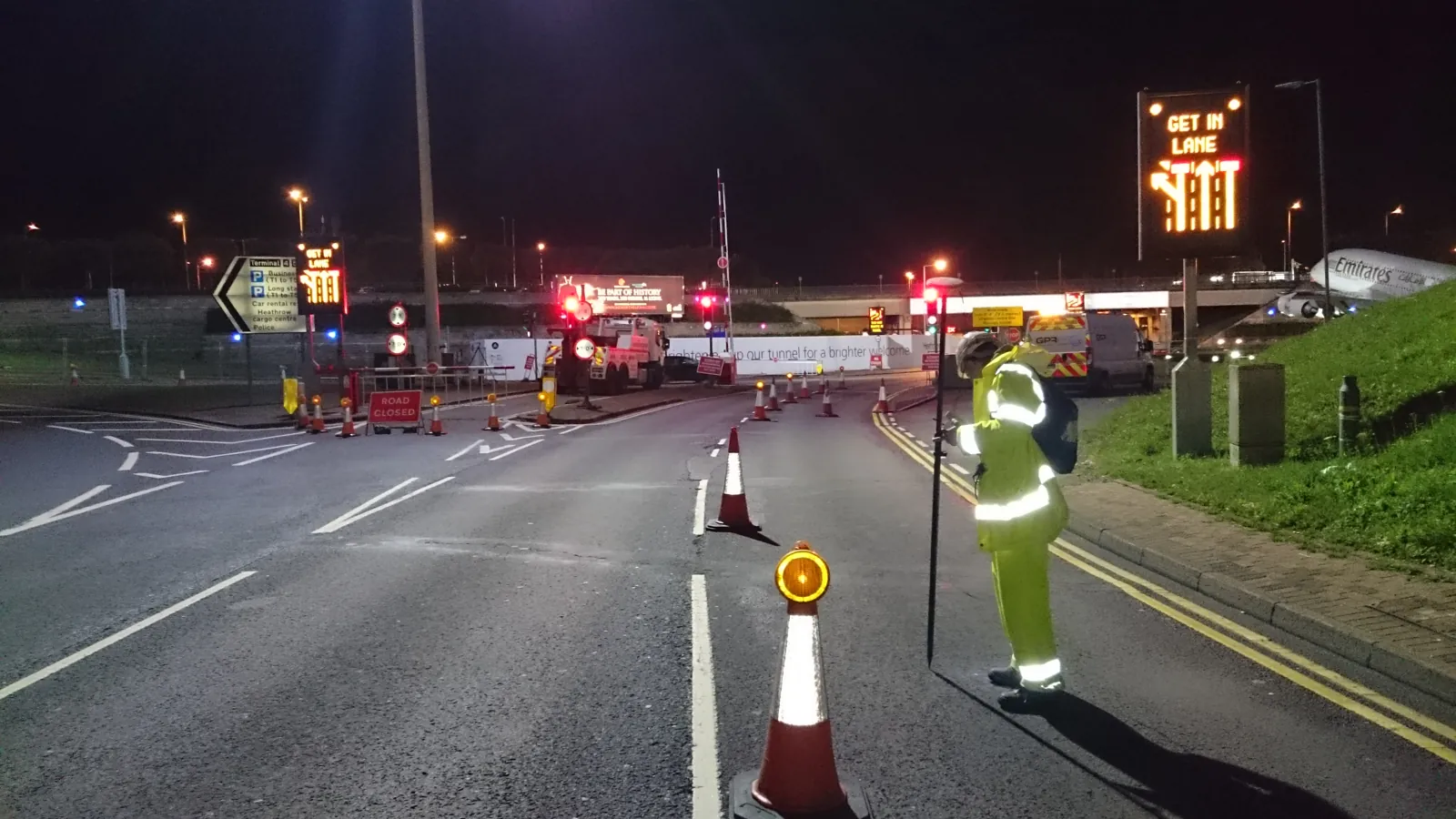
Busy streets, shops and offices often can only be surveyed outside normal hours. We can work night shifts and weekends by arrangement. These are charged at a higher rate, as set out in our terms and conditions. Traffic management and permits are arranged by the client.
When GPR is not the right tool
If GPR will not answer your question, for example because the surface is inaccessible or the ground is unsuitable, we will tell you before you book, and suggest another approach where we can.
Questions we're asked
Do you charge extra for travel to London?
Travel time is built into our quote. We plan London work around full shifts so that the cost of travel is spread over a productive day on site.
Can you work at night?
Yes. Utility surveys in busy streets often have to be done at night. Night shifts are charged at a higher rate. Please tell us about any permits or traffic management when you enquire.
How deep can GPR see in London?
It varies. In London Clay, useful depth can be under a metre. In gravels or dry made ground it can be more. We state the depth achieved in the report, and use electromagnetic location to trace deeper metallic services.